10 Easter Flower Bouquet Ideas for a Fresh Spring Celebration
Easter is just around the corner, and what better way to celebrate than with beautiful flower arrangements? Fresh blooms bring color and life to your holiday celebrations, whether you’re hosting a family gathering or simply decorating your home for spring.
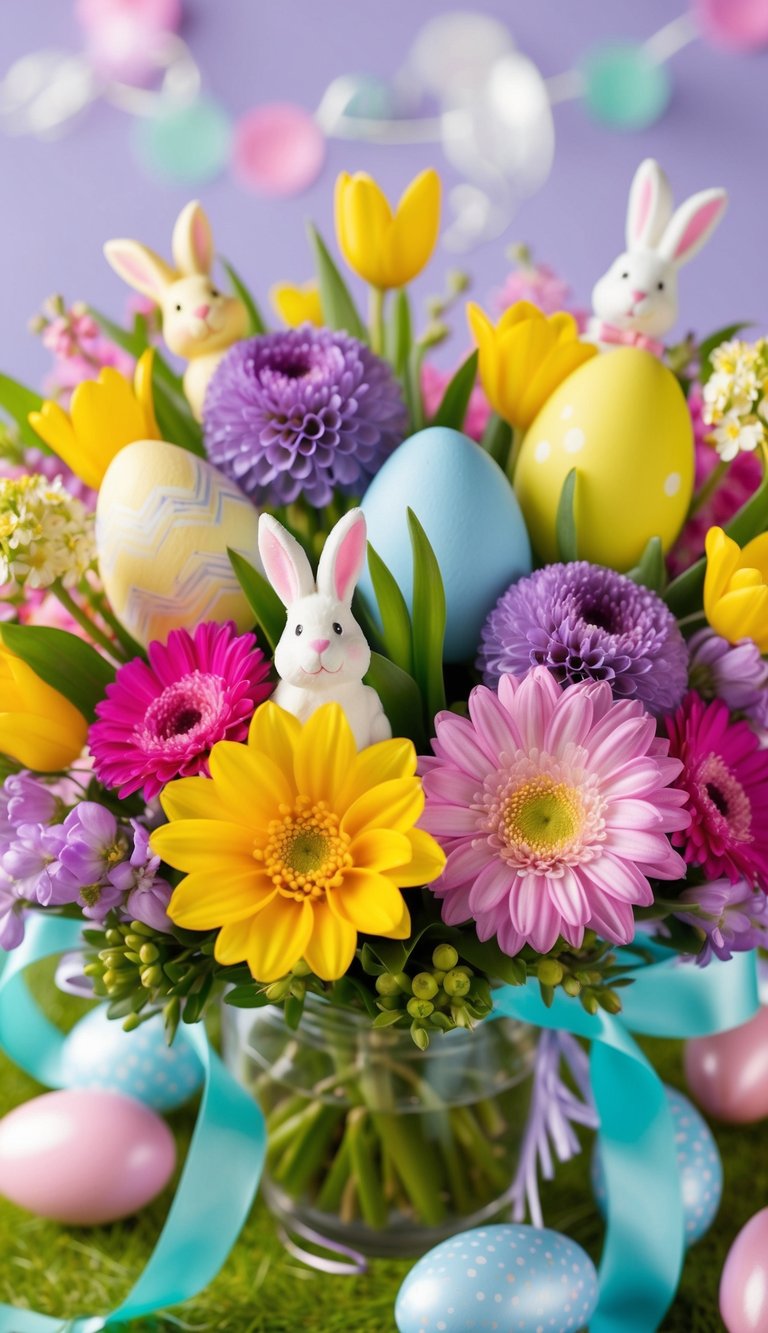
These Easter flower bouquet ideas will help you create stunning arrangements that capture the season’s spirit. From traditional Easter lilies to cheerful daffodils and tulips, you’ll find plenty of inspiration to brighten your space. You can mix and match colors, flowers, and decorative elements to create something truly special for the holiday.
1. Tulip Delight
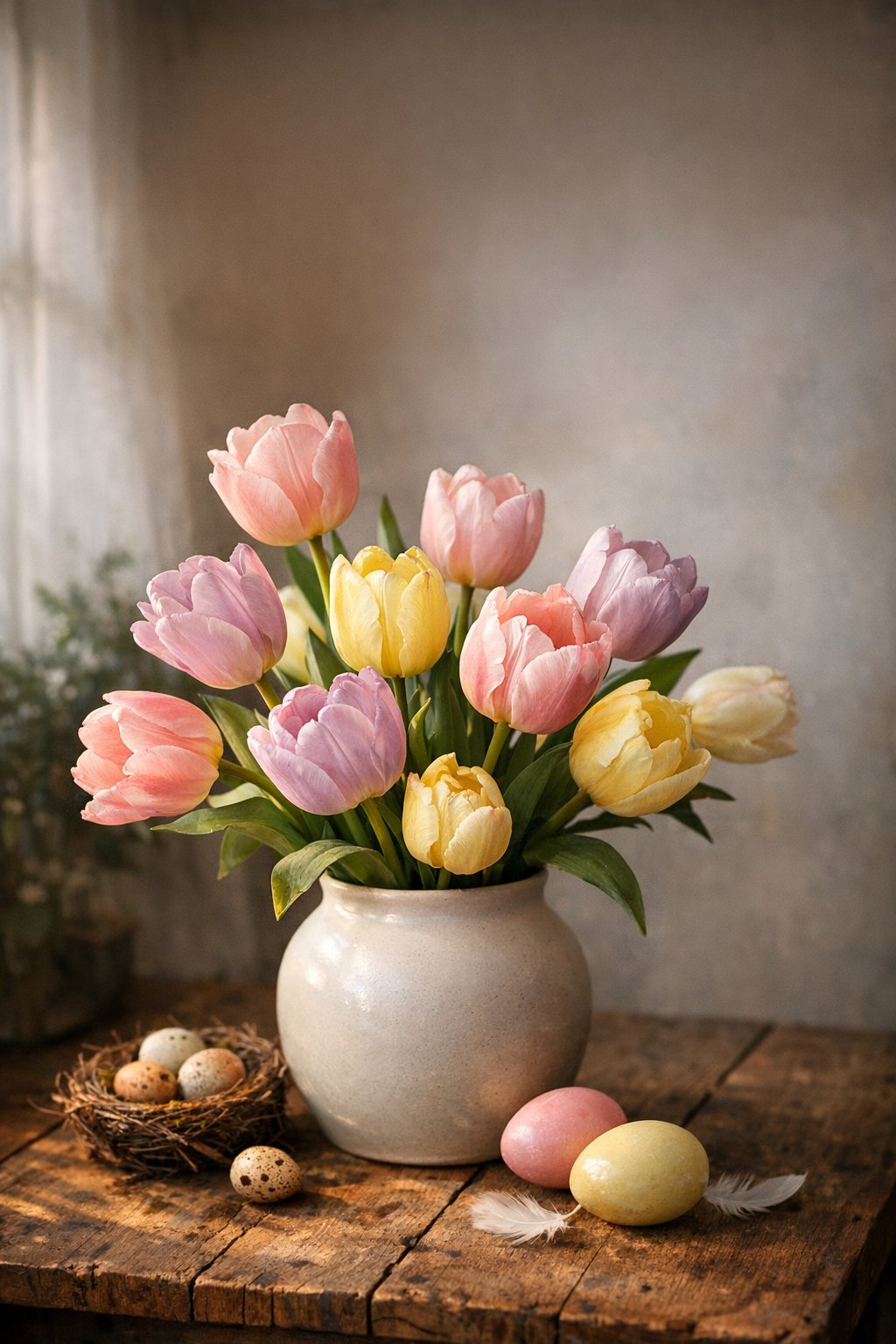
Tulips are perfect for Easter bouquets because they naturally symbolize spring and new beginnings. You can create a stunning arrangement using tulips in pastel colors like pink, yellow, and lavender to capture the Easter spirit.
Try mixing different tulip varieties for added visual interest. Parrot tulips with their ruffled edges can add texture, while classic single tulips provide elegant simplicity. Even just a simple bundle of one tulip color makes a beautiful statement.
For a special touch, arrange your tulips in a basket with some Easter grass or wrap them with a pastel ribbon. You can also add some baby’s breath or greenery to complement the tulips without overwhelming them.
When selecting tulips, look for tight buds that are just starting to show color. This ensures your bouquet will last longer as the flowers continue to open throughout the Easter celebration.
Don’t forget that tulips continue to grow even after being cut. Leave a little extra space in your vase to accommodate this growth and check water levels daily.
2. Sunshine Daffodils
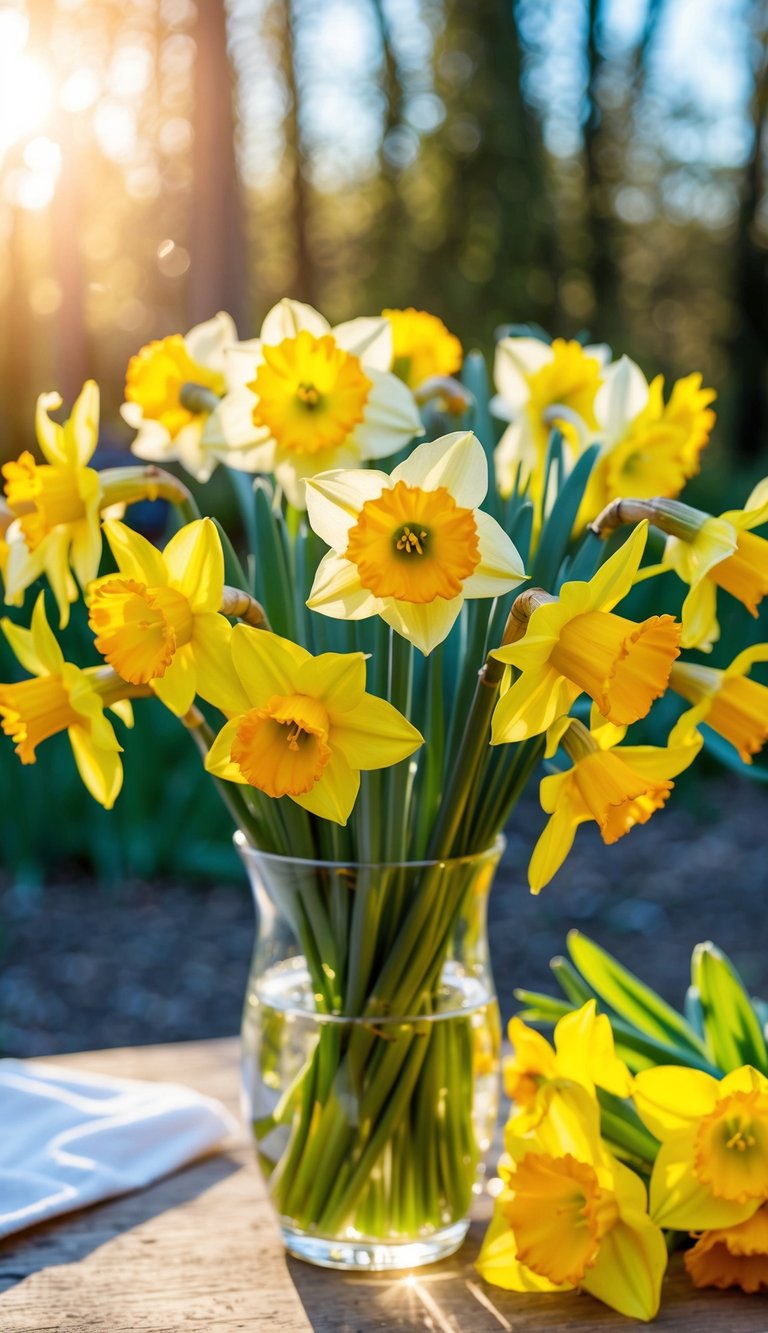
Daffodils bring cheerful energy to any Easter bouquet with their bright yellow blooms. They symbolize new beginnings, making them perfect for the spring holiday.
You can create a stunning arrangement with just daffodils in various shades of yellow and white. Try mixing trumpet daffodils with smaller varieties for visual interest.
Place your daffodils in a simple glass vase to let their sunny color be the star. A blue or purple container creates a beautiful contrast with the yellow flowers.
Remember that daffodils produce a sap that can harm other flowers. To prevent this, condition them separately by letting them sit in water for a few hours before adding them to your mixed bouquet.
For a country-inspired look, wrap your daffodil stems with twine or raffia. Add some fresh greenery like eucalyptus or fern fronds to complement the bright yellow blooms.
Daffodils can last up to a week in a vase if you change the water every couple of days. Cut the stems at an angle for maximum water absorption.
3. Springtime Lilies
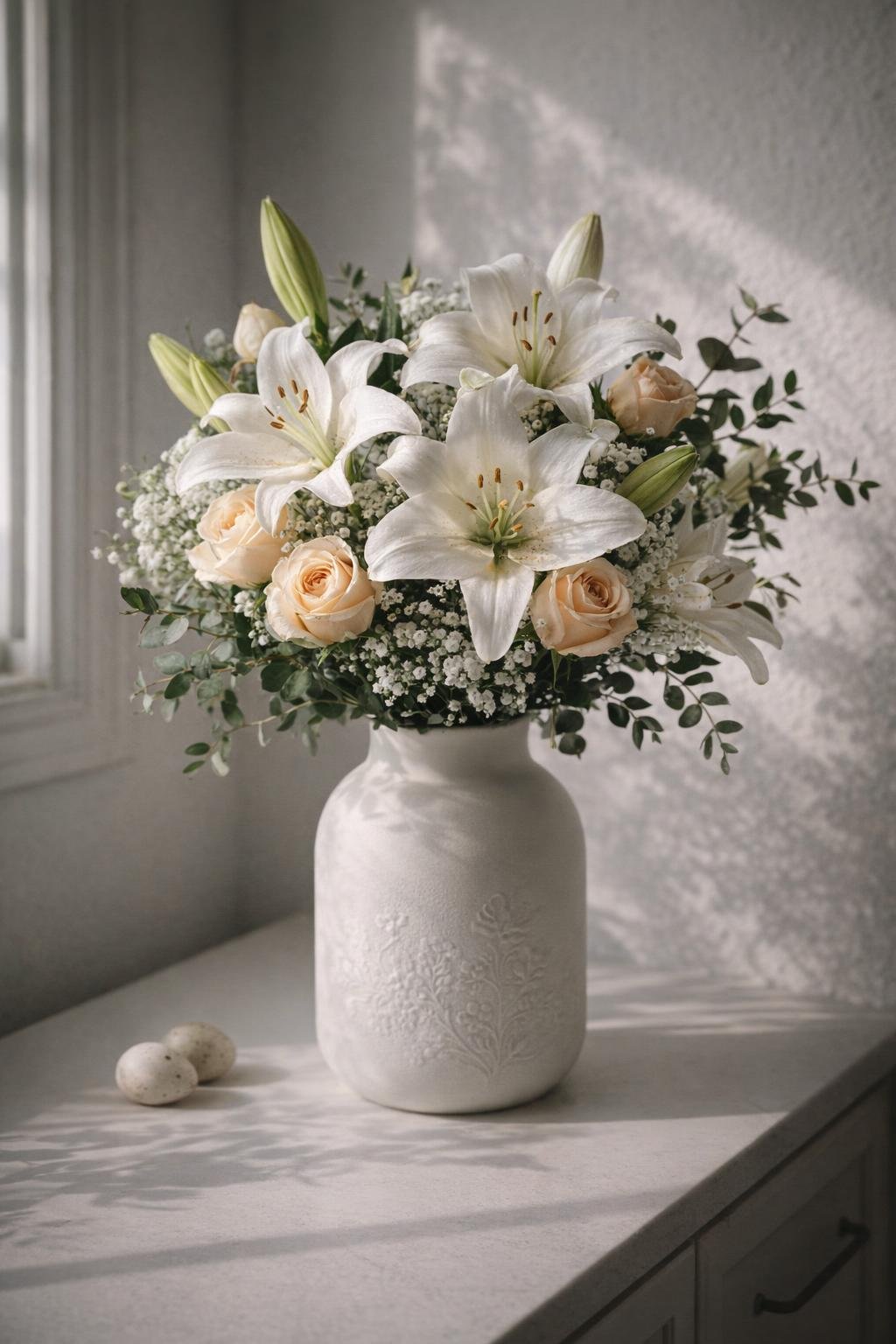
Lilies make a stunning centerpiece in any Easter bouquet. Their trumpet-shaped blooms and sweet fragrance bring elegance to your holiday table or entryway.
Easter lilies are the traditional choice with their pure white flowers symbolizing purity and hope. You can find them at most florists and garden centers during the spring season.
Try mixing different lily varieties for a more interesting arrangement. Consider stargazer lilies with their striking pink and white petals, or calla lilies with their sleek, modern shape.
For a fuller bouquet, pair your lilies with complementary flowers like tulips or daffodils. The contrast in shapes creates visual interest while maintaining that springtime feel.
Don’t forget to remove the pollen-covered anthers from the lilies. This prevents staining and extends the life of your flowers. Just gently pinch them off when the buds open.
You can arrange lilies in a clear glass vase to showcase their long stems, or cut them shorter for a more compact display. Either way, they’ll bring a fresh, fragrant touch to your Easter celebrations.
4. Pastel Hyacinths
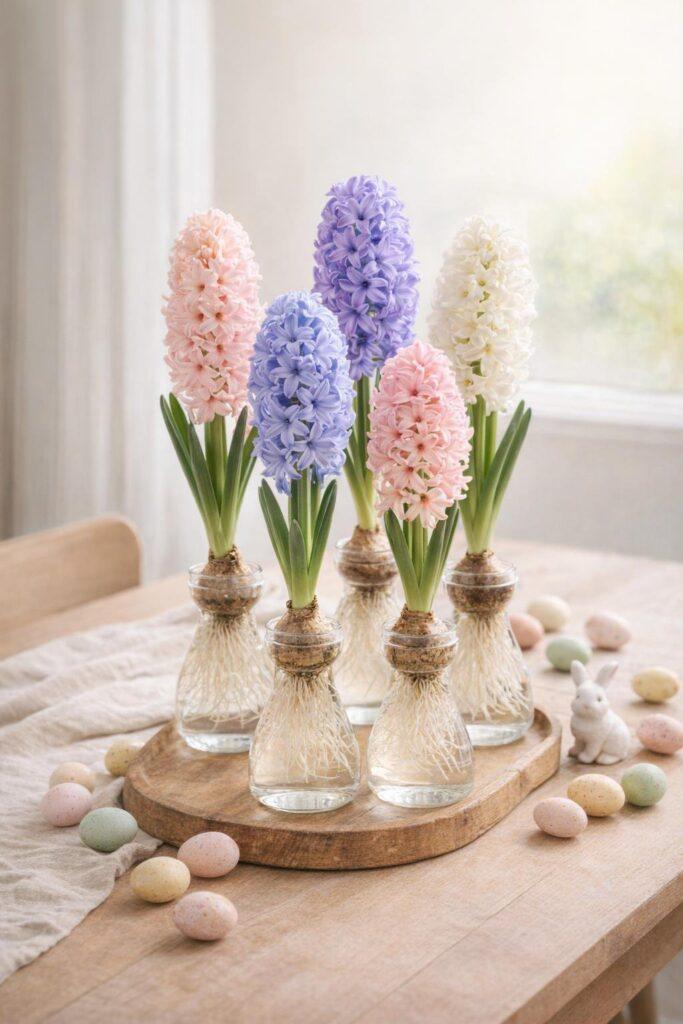
Hyacinths bring a magical touch to Easter bouquets with their soft pastel colors and sweet fragrance. You can find them in gentle pinks, baby blues, soft purples, and creamy whites – perfect for creating a dreamy spring arrangement.
Try grouping hyacinths of the same color for a bold statement, or mix different pastel shades for a more playful look. Their strong stems stand tall in arrangements, adding structure and height to your Easter centerpiece.
The best part about hyacinths is their amazing scent. When you place them on your Easter table, they’ll fill the room with a delicate spring fragrance that your guests will love.
For a simple but elegant arrangement, place 4-6 hyacinth stems in a clear glass vase. Add some decorative Easter eggs at the base of the vase for a festive touch. Or, for a more rewarding experience, grow your own hyacinth bulbs in bulb vases.
You can also combine hyacinths with other spring flowers like tulips or daffodils. Their strong fragrance pairs well with these milder-scented blooms, creating a balanced and beautiful Easter bouquet.
5. Easter Lilies
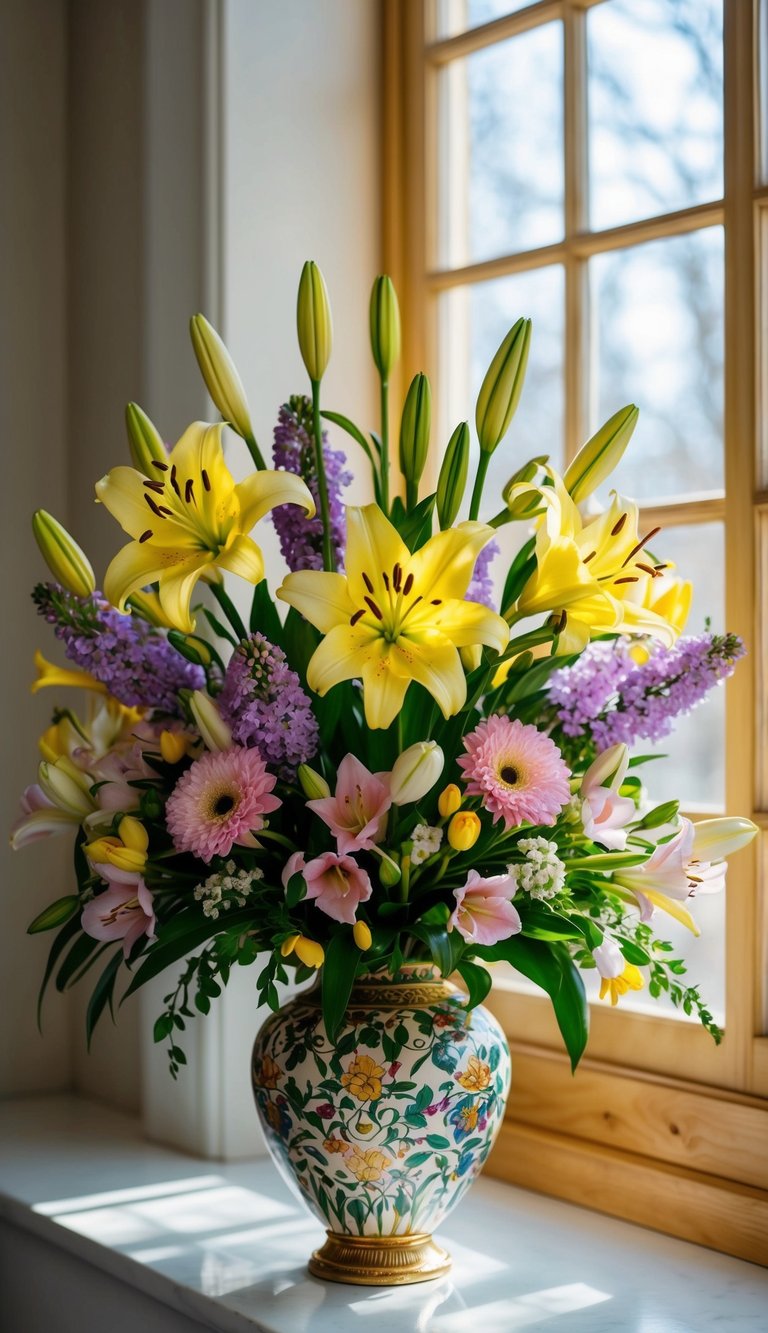
Easter lilies are the classic choice for Easter flower arrangements. These elegant white blooms symbolize purity and hope, making them perfect for the holiday celebration.
You can create a stunning bouquet with just Easter lilies alone. Their trumpet-shaped flowers and sweet fragrance make them stand out in any arrangement.
For a modern twist, try pairing Easter lilies with pastel-colored roses or tulips. The contrast between the pure white lilies and soft colored companions creates a beautiful balance.
If you’re giving Easter lilies as a gift, consider adding some greenery like ferns or eucalyptus. This adds texture and makes the white blooms pop even more.
Remember that Easter lily bouquets look lovely in both traditional vases and more rustic containers. A simple glass vase shows off their long stems, while a basket lined with moss creates a more natural look.
You can also incorporate Easter lilies into centerpieces for your holiday table. Just trim the stems shorter and arrange them with candles for an elegant dining display.
6. Cherry Blossom Joy
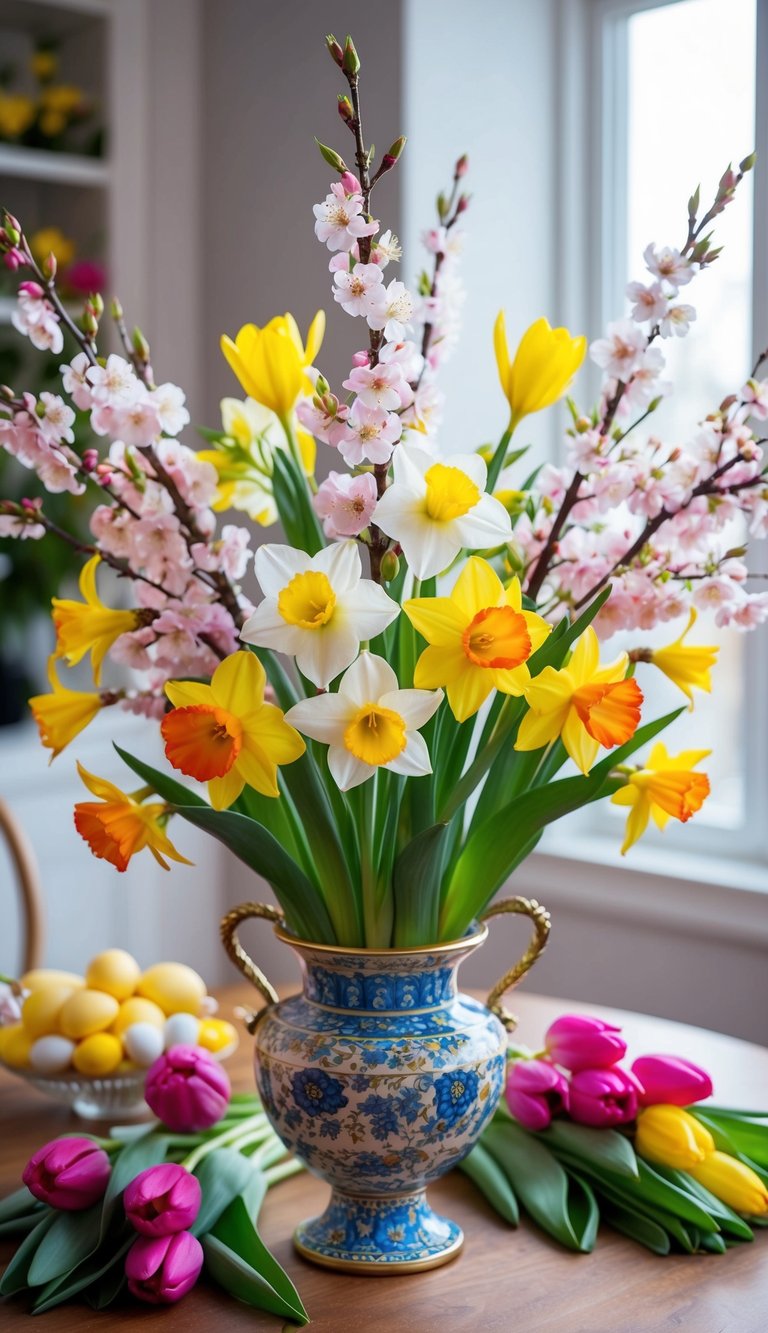
Cherry blossoms bring a touch of Japanese elegance to your Easter celebration. These delicate pink flowers create a soft and dreamy bouquet that stands out from traditional Easter options.
You can mix cherry blossoms with white lilies for a striking contrast. The combination of soft pink and pure white creates a fresh spring vibe that’s perfect for Easter gatherings.
Add some pastel green foliage to enhance the springtime feel. Small branches with a few blossoms make the arrangement look more natural and garden-inspired.
For a modern twist, place your cherry blossom arrangement in a blue ceramic vase. The blue contrasts beautifully with the pink blossoms and creates a contemporary look.
Cherry blossoms don’t last long once cut, so get them just a day or two before your Easter event. You can also use artificial cherry blossoms if real ones aren’t available in your area.
These bouquets work wonderfully as a centerpiece for your Easter brunch table. Their height adds dimension without blocking anyone’s view across the table.
7. Warm Peony Mix
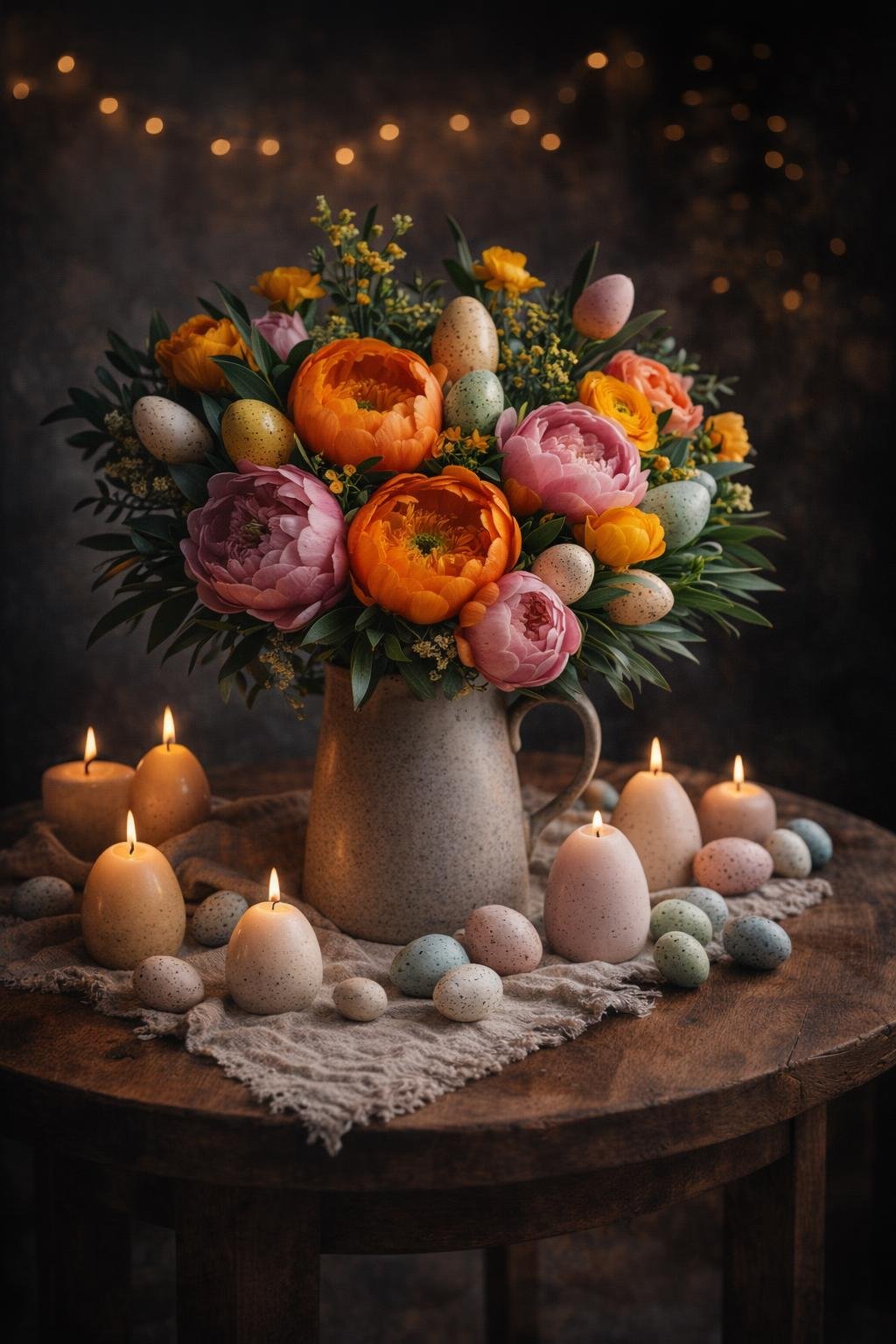
Peonies are absolute showstoppers in any Easter bouquet, and in this arrangement they take on a richer, more dramatic role. A warm mix of coral, deep apricot, and blush pink peonies creates a bold spring statement that feels elegant and moody rather than overly pastel.
Instead of light, airy styling, this look leans into depth and contrast. Dark green foliage frames the blooms beautifully, while delicate yellow filler flowers add subtle highlights that catch the candlelight.
Speckled Easter eggs are nestled directly into the arrangement, blending seamlessly with the florals. Around the base, egg-shaped candles create a soft, flickering glow that transforms the bouquet into an intimate Easter centrepiece. The warm candlelight enhances the coral and pink tones, giving the entire display a luxurious evening feel.
If peonies are hard to source, you can recreate this look with ranunculus or garden roses in similar warm shades. Focus on full, layered blooms that hold their shape and create that lush, rounded silhouette.
Display your arrangement in a textured ceramic jug or matte stoneware vase. The rustic finish complements the natural wooden table and linen runner, grounding the brighter florals and keeping the look sophisticated.
For added height and seasonal texture, tuck in a few budding branches or small sprigs of blossom. Keep the palette warm and cohesive to maintain that elegant, candlelit Easter mood.
8. Fragrant Freesias
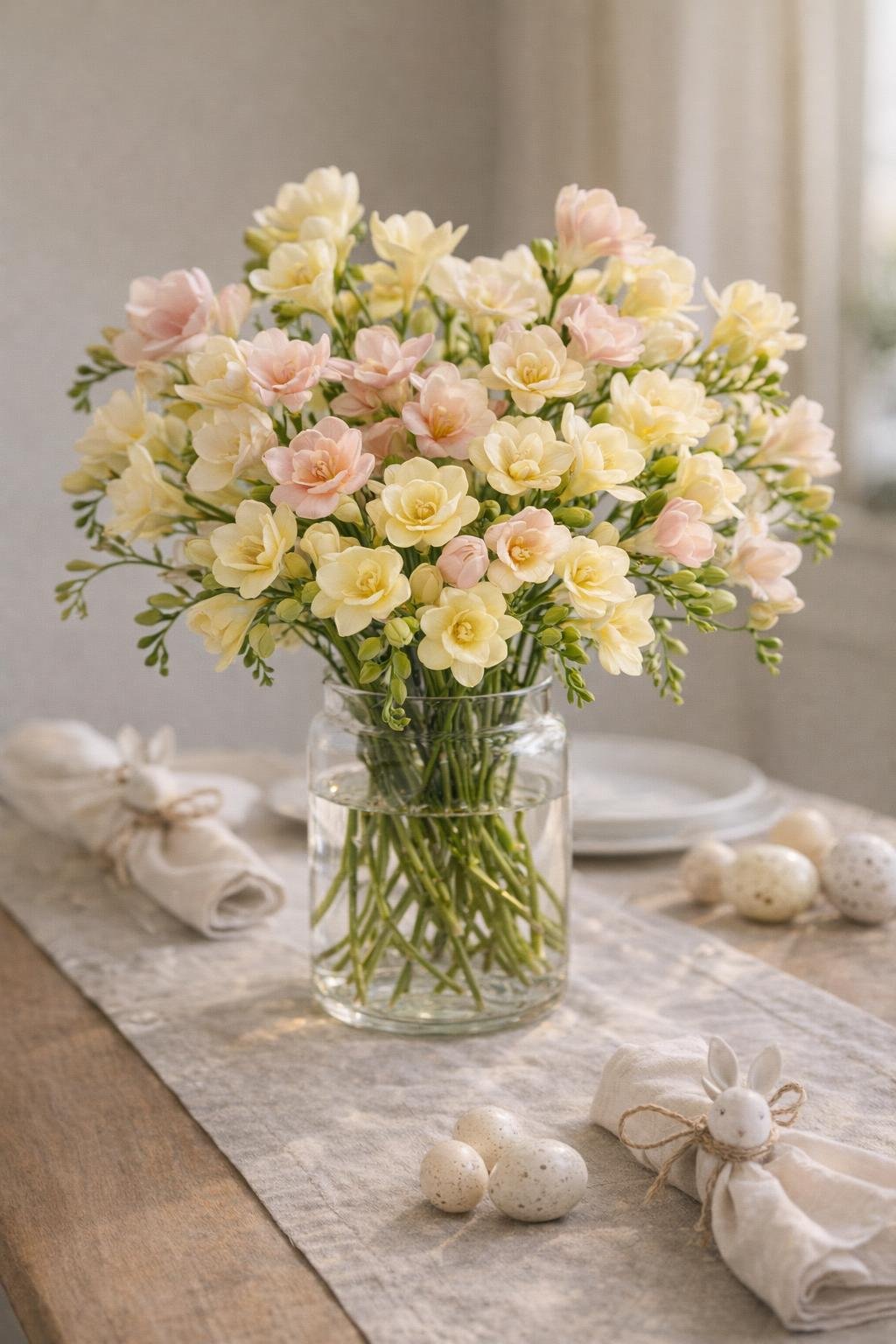
Freesias are one of the most fragrant flowers you can include in your Easter bouquet. Their sweet scent will fill your home with a delightful spring aroma that guests will notice the moment they walk in.
These funnel-shaped blooms come in a rainbow of colors including white, yellow, pink, purple, and red. You might consider choosing pastel shades to match the Easter theme or go bold with vibrant colors for a statement piece.
Freesias have multiple blooms on each stem, making them perfect for adding volume to your arrangement. You can mix them with other Easter favorites or create a bouquet using freesias alone.
When arranging freesias, remember they have naturally curved stems. This gives your bouquet a graceful, natural look without much effort on your part.
To make your freesias last longer, trim the stems at an angle and change the water every two days. You’ll enjoy their beautiful fragrance throughout the Easter weekend.
9. Daisy Dreams
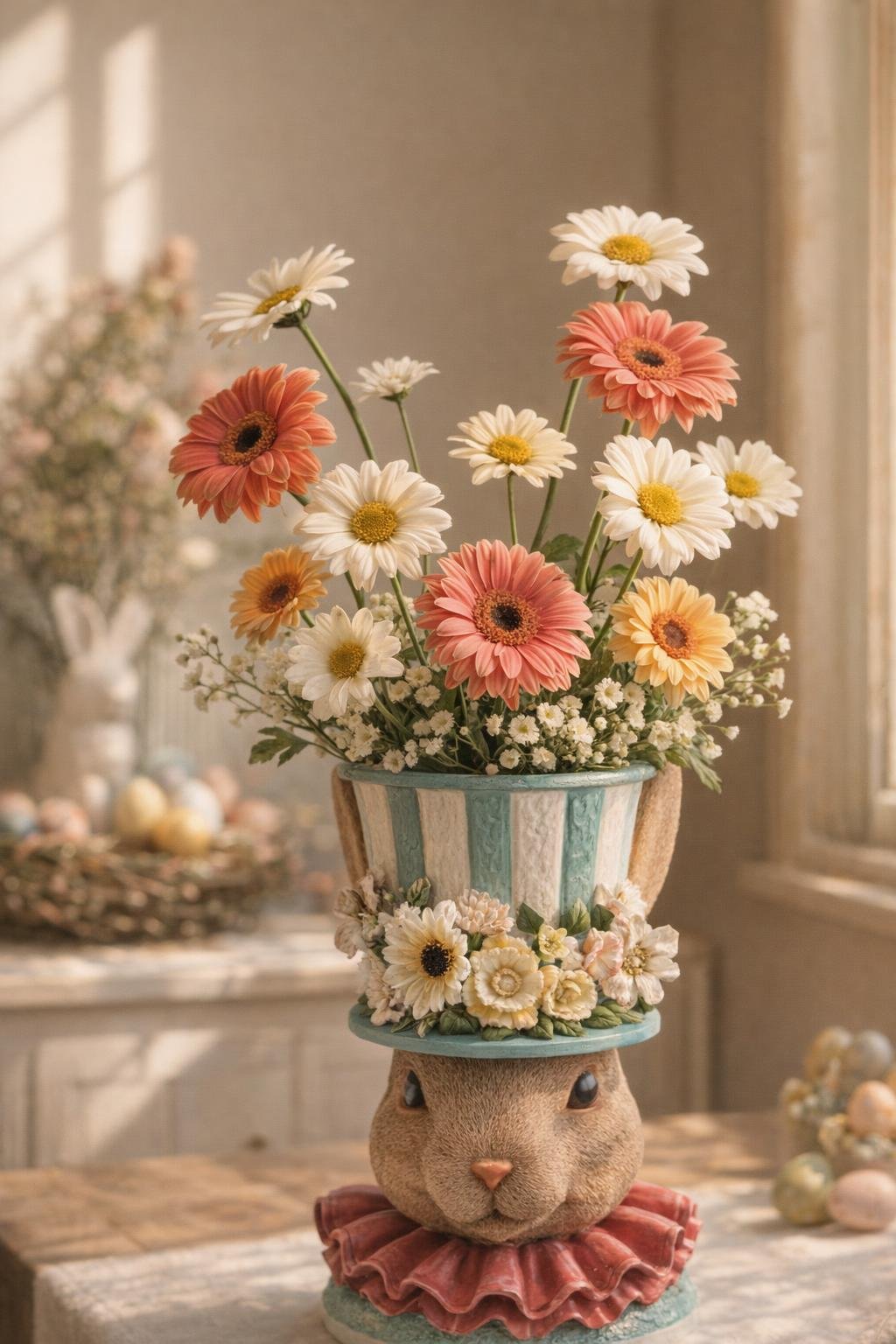
This sweet Easter arrangement pairs classic white daisies with soft coral and peach gerbera daisies for a look that feels both fresh and nostalgic. The creamy whites keep the design light and airy, while the warm pastel gerberas add just enough spring color to make it feel celebratory.
Instead of a simple jar or bottle, this arrangement is styled in a charming ceramic bunny pedestal vase, available on Amazon. The sculpted rabbit base and delicate floral detailing instantly elevate the bouquet and turn it into a true Easter centerpiece. The soft aqua and cream tones of the vase complement the blooms beautifully without competing with them.
To recreate this look:
Start with white daisies as your foundation. Space them evenly to create height and movement. Add in coral and peach gerbera daisies at varying levels for dimension. Tuck small clusters of baby’s breath around the base to soften the design and create that garden-gathered feel.
Keep the arrangement slightly airy rather than tightly packed. Let a few stems stand taller than the others so it feels natural and organic rather than formal.
Because the vase itself is decorative and eye-catching, there’s no need for additional ribbon or embellishment. The bunny pedestal already provides that special Easter detail.
This style works beautifully as:
• An Easter brunch centerpiece
• A mantel display
• An entry table accent
• A seasonal kitchen arrangement
The height allows the flowers to feel abundant while still keeping sightlines open across the table, making it practical as well as charming.
10. Colorful Carnations
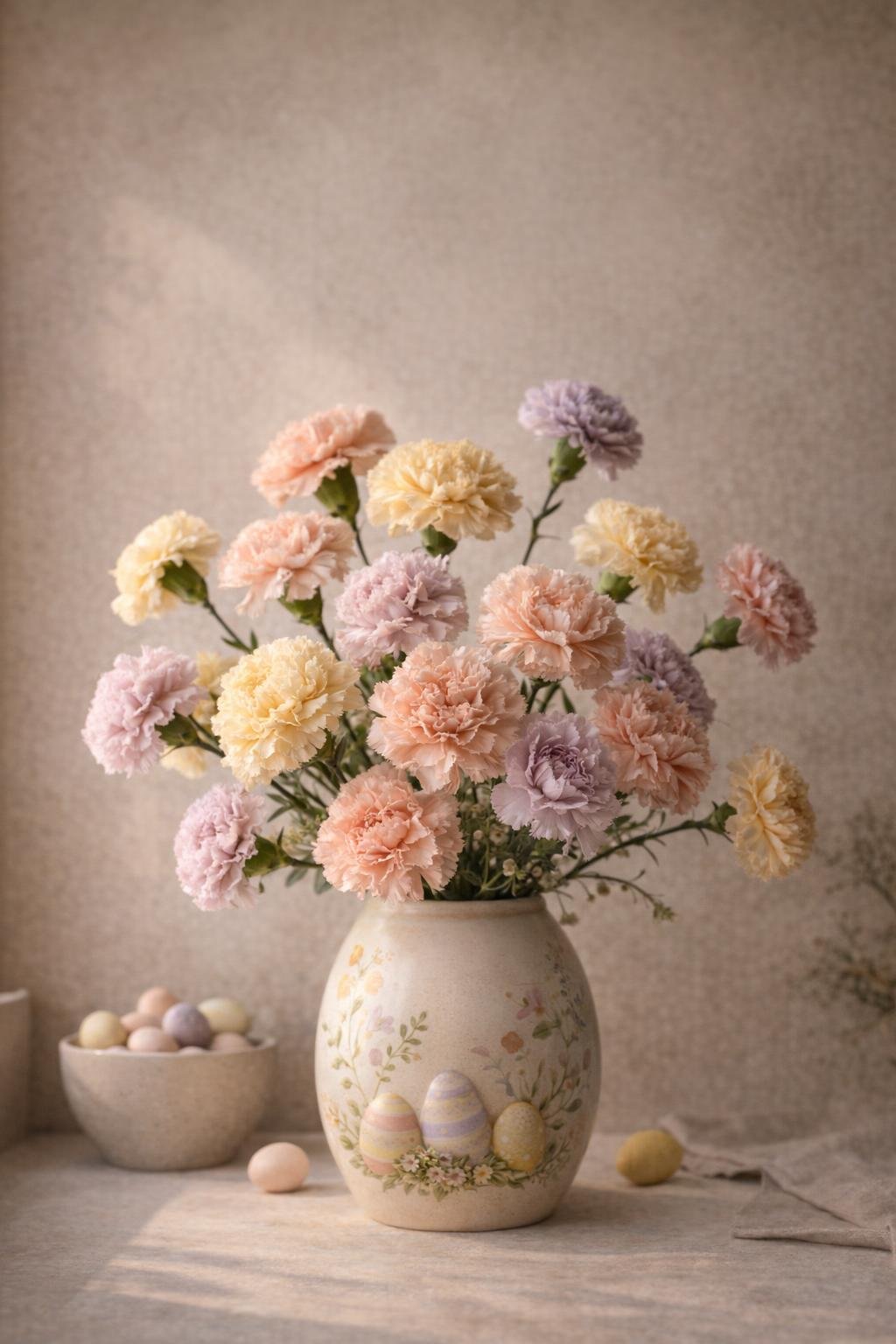
Carnations are perfect for Easter bouquets because they last a long time and come in many bright colors. You can find them in pink, purple, yellow, and white—all the classic Easter shades.
Try creating a rainbow effect with different colored carnations bunched together. This creates a cheerful display that brings spring energy into any room.
For a special touch, you can dye white carnations at home. Just add food coloring to water, place the stems in, and watch as the flowers slowly change color. Kids love helping with this project!
Carnations also mix well with other Easter favorites. You can pair them with daisies and baby’s breath for a sweet arrangement that won’t break the bank.
Consider adding some greenery like ferns or eucalyptus to make the carnation colors really pop. The contrast makes the bright blooms stand out even more.
A simple mason jar filled with colorful carnations makes a perfect Easter centerpiece or gift. You can tie a pastel ribbon around the jar for extra holiday charm.
Choosing the Right Flowers
Selecting flowers for your Easter bouquet involves understanding spring symbolism and using colors that capture the season’s fresh energy. The right blooms can transform your holiday decorations and bring special meaning to your celebrations.
Symbolism of Easter Flowers
Lilies are the classic Easter flower, representing purity and rebirth. White lilies, especially Easter lilies, symbolize Christ’s resurrection in Christian traditions. They make a powerful centerpiece in any arrangement.
Daffodils and tulips represent new beginnings and the arrival of spring. When you include these in your bouquet, you’re celebrating nature’s awakening after winter’s sleep.
Hyacinths bring a lovely fragrance and symbolize peace and commitment. Their tight clusters of blooms add texture to your arrangements.
Roses, particularly in pastel shades, represent love and appreciation. They’re perfect for Easter bouquets you plan to give as gifts to family and friends.
Color Palettes for Spring
Traditional Easter Colors:
- Soft yellows (like daffodils and tulips)
- Gentle purples (like hyacinths and irises)
- Pure whites (like lilies and daisies)
- Delicate pinks (like tulips and roses)
These colors reflect spring’s natural palette and create a harmonious Easter display. You might try an ombré effect with flowers in graduating shades of the same color.
For something more unique, try unexpected combinations like coral and mint or lavender and butter yellow. These fresh pairings feel modern while still honoring Easter traditions.
Don’t forget greenery! Ferns, eucalyptus, and baby’s breath add volume and soften your bouquet while keeping it spring-appropriate.
Arranging Your Bouquet
Creating a beautiful Easter flower arrangement is easier than you might think! With the right techniques and tools, you can transform a bunch of flowers into a stunning bouquet that captures the spring spirit.
Layering Techniques for Different Textures
Start by selecting your focal flowers – typically the largest and most eye-catching blooms like lilies or tulips. Place these in the center of your arrangement.
Add secondary flowers like daffodils or hyacinths around your focal points. These medium-sized blooms create visual interest and fill out your bouquet.
Work in a circular pattern, gradually moving outward. This creates a natural, balanced look.
Try the spiral technique by holding stems at an angle and adding each new stem slightly lower than the previous one. This creates depth and makes your bouquet look fuller.
Don’t forget to mix textures! Pair soft, delicate flowers with more structured blooms. Add wispy elements like baby’s breath or ferns as fillers to create contrast.
Using Floral Foam and Alternatives
Floral foam provides excellent support for your Easter arrangement. Soak it completely in water before use and place it in your container.
When inserting stems, push them in at least 1-2 inches deep for stability. Start with greenery to create a base, then add your largest flowers.
No foam? No problem! Try these alternatives:
- Chicken wire: Crumple it into a ball and place in your vase
- Tape grid: Create a grid across the top of your vase using clear tape
- Pebbles or marbles: Fill the bottom of your vase to stabilize stems
Change the water every 2-3 days to keep your Easter bouquet fresh longer. Add flower food for extra longevity.
For an eco-friendly option, try a flower frog (metal pin holder) that can be reused for future arrangements.